CDOT started working in the field of micro-finance activity in 2007.
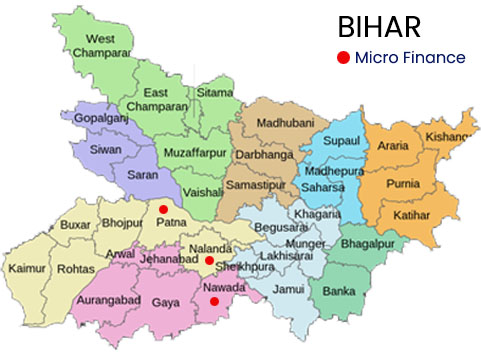
CDOT always believed that MF is one of the support which really help the poor house hold to build the business and make sustainable and respectable living. We believe that to deliver credit to poor household it is very important to become meaningful for the community. We believe in sustainable work rather hard core commercial approach. We are a social micro finance institution. We work in three district of Bihar.
The operational areas – Nalanda, Nawada and fringe areas of Patna. No. of Branches – Eight
Total of No. of Staff involved – 56
Financial inclusion is one of the largest and most impactful pillars of CDOT’s work, driving grassroots economic transformation across rural and semi-urban India. Through a robust network of 2,500+ active centres across 8 states, CDOT is ensuring that essential financial services reach the last mile—right at the doorstep of underserved communities.
Our model goes beyond service delivery. We are building a cadre of local entrepreneurs by empowering individuals to operate as Business Correspondents (BCs), creating sustainable livelihood opportunities. These community-based agents not only generate income for themselves but also act as financial enablers—bringing banking, credit, savings, insurance, and government benefit services closer to the people who need them the most.
By expanding access to formal financial systems, CDOT plays a critical role in strengthening local economies. Increased financial participation leads to higher savings, better credit utilization, enhanced productivity, and improved resilience among rural households—directly contributing to India’s broader economic growth and financial stability.
Our efforts are strengthened through strategic partnerships with leading financial institutions, including Bihar Gramin Bank, Bank of India, Bank of Baroda, Punjab National Bank, Ujjivan Small Finance Bank, and ESAF Small Finance Bank. These collaborations enable us to deliver reliable, scalable, and inclusive financial solutions across diverse geographies.
CDOT is also actively contributing to strengthening the financial ecosystem through its growing focus on Non-Performing Asset (NPA) recovery. By supporting banks and institutions in improving recovery outcomes, we help maintain the health of the financial system while encouraging responsible borrowing practices at the community level.
A key highlight of our inclusion efforts is our collaboration with JEEViKA in Bihar. Through this partnership, we have empowered over 200 “JEEViKA Didis” as BC agents, along with an additional 200+ women entrepreneurs. CDOT provides them with end-to-end support—including training, technology, and business enablement—helping them build independent livelihoods while becoming catalysts of financial inclusion in their communities.
At its core, CDOT’s financial inclusion initiative is not just about access—it is about empowerment, entrepreneurship, and enabling communities to participate meaningfully in India’s growth story.
Rising Non-Performing Assets (NPAs) remain one of the most critical challenges facing India’s banking sector, impacting liquidity, profitability, and the overall flow of credit to the economy. Addressing this issue requires strong last-mile engagement, local trust, and consistent follow-up—areas where CDOT has built deep expertise.
CDOT has emerged as a reliable partner for banks in strengthening recovery systems at the grassroots level. Working closely with Bank of Baroda, Punjab National Bank, and Bihar Gramin Bank, we have developed a community-driven recovery model that combines field presence, relationship-building, and structured processes.
In the last financial year alone, CDOT facilitated the recovery of over ₹80 crores, demonstrating both scale and effectiveness. Our approach focuses on ethical recovery practices, borrower engagement, and financial awareness—helping clients understand their obligations while supporting them in re-entering the formal financial system.
This initiative is also creating a strong livelihood pathway. By involving Business Correspondent (BC) agents and local entrepreneurs in recovery activities, we are enabling them to earn additional income while strengthening their role within the financial ecosystem. Recovery services are fast emerging as a high-growth opportunity for BC agents, adding a new dimension to their existing financial inclusion work.
Beyond immediate recoveries, our efforts contribute to improving the overall health of the banking system. Lower NPAs mean stronger balance sheets for banks, increased confidence in rural lending, and greater credit availability for individuals and small businesses—fueling economic growth at the grassroots level.
Through its NPA recovery initiatives, CDOT is not only supporting financial institutions but also reinforcing a culture of responsible borrowing and sustainable financial behavior across communities.
| Name of Bank | No. of BCA Active | No. of A/C Recovered | Amount Recovered | Commission Received |
|---|---|---|---|---|
| Bihar Gramin Bank | 155 | 3,321 | ₹14,95,82,835 | ₹29,91,657 |
| Bank of India | 76 | 986 | ₹2,31,32,569 | ₹18,70,778 |
| Punjab National Bank | 21 | 72 | ₹16,03,865 | ₹3,20,773 |
| Total | 252 | 4,379 | ₹17,43,19,269 | ₹51,83,208 |
| Name of Bank | No. of BCA Active | No. of A/C Recovered | Amount Recovered | Commission Received |
|---|---|---|---|---|
| Bihar Gramin Bank | 138 | 5,032 | ₹22,62,86,914 | ₹45,25,738 |
| Bank of India | 100 | 1,102 | ₹2,78,67,180 | ₹22,87,118 |
| Punjab National Bank | 1 | 2 | ₹49,500 | ₹9,900 |
| Total | 239 | 6,136 | ₹25,42,03,594 | ₹68,22,756 |
| Name of Bank | No. of BCA Active | No. of A/C Recovered | Amount Recovered | Commission Received |
|---|---|---|---|---|
| Bihar Gramin Bank | 329 | 16,619 | ₹74,78,82,202 | ₹1,49,57,644 |
| Bank of India | 74 | 1,327 | ₹3,26,67,429 | ₹26,21,208 |
| Punjab National Bank | 2 | 36 | ₹8,04,410 | ₹1,60,882 |
| Total | 405 | 17,982 | ₹78,13,54,041 | ₹1,77,39,734 |
Out of its commitment towards society, CDOT identified that rural society of India has major health concerns which is a combination of cost, quality, accessibility and people’s behaviour towards health. In this purview, CDOT created an ecosystem of community health through its 600 CHFs (Community Health Facilitator) in eight districts of Bihar and Jharkhand, i.e Patna, Bhojpur, Nalanda, Nawda, Gaya in Bihar and Hazaribagh, Bokaro and Dhanbad in Jharkhand, with the support of IPE Global, USAID and Opportunity International, Australia. All these CHFs are women chosen from villages and cater to the people of their own village and have been provided training on different health issues related to Menstrual Health and Hygiene, Reproductive Health and Family Planning, and other preventive health-related issues to improve the knowledge of the community through regular home visits. To make the health system accessible, all CHFs provide a doorstep treatment facility through our Teleconsultation service at zero cost. During the Teleconsultation sessions, if a Doctor finds some patients who need to be physically examined or admitted to a hospital, they are referred to empanelled hospitals in the vicinity. The CHF Program also takes into consideration the importance of social security and our CHFs motivate people to register themselves in different national social security schemes and facilitating them to connect with a health insurance.
To make the program and effort sustainable, we emphasize on making our CHFs entrepreneurs. They earn commission against health insurance and by selling products like sanitary pads and other health related products.
We reached out to 1.2 lakhs households through the CHF health program. The vision is to build a culture of health through the establishment of a sustainable community support system.
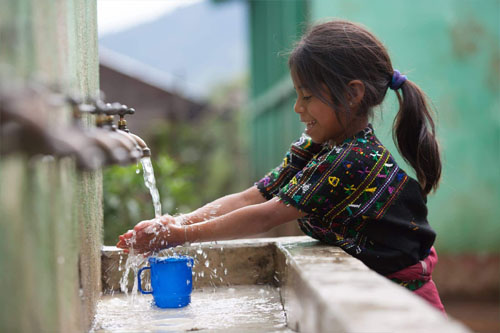
CDOT partners with local government, organizations and individuals and aims to bring sanitation system to their own household and communities. CDOT has also been instrumental in the creation of local infrastructure to help support the actual building of toilets. Under this program, CDOT educate and mobilize communities and families to stop open defecation to improve community health and link the community with the sanitation credit. So far, with the help of CDOT, Arohan has disburse INR 39.56 Cr toilet loan to 16139 members. CDOT first introduced a product called “LOTA”, Loan On Toilet Acquisition. CDOT along with PSI launched a one its kind “SAADHAN sanitation mart” at Daniawan, Patna. CDOT along with MI India have set up a water plant at Noorsarai Block which will supply 8000lts of RO water per day to the villagers.
Bihar is one of the state in India where 89% of population resides in villages. It is obvious that agriculture is one of the major source of employment and livelihood of majority of the population. CDOT major focus area is to provide support to small and marginal farmers and enhance the productivity of the crop. It will increase the food security of poor farmers. CDOT work in three main areas of agriculture.
Insurance is one of the integral part of micro finance activities. However CDOT looks into differently and we try to inform and aware the community about the risks and how insurance can protect from risk. CDOT is working on different risk mitigation through products like
CDOT has worked with many number of insurance agencies. We have 67,232 customers directly linked with our insurance scheme. The major problems in villages is servicing of insurance. Apart from health insurance where the process to claim is very cumbersome we have been able to deliver the products and service the Insurance to their door step.
Still in Bihar the insurance coverage is less than 22% which is very dismal. We are trying to work out on strategy where we can mobilize the community and aware them. Mostly people think Insurance as a burden, though it is very essential. Our continuous endeavor will help to deliver product and cover more number of uncovered mass under insurance
We have worked with Bajaj, Max Bupa, LIC, Kotak, DHFL etc.
Empowering youth with relevant skills and confidence is central to CDOT’s vision of inclusive growth. Through our active partnership with Bihar Skill Development Mission (BSDM), we are contributing to government-led efforts to prepare young people—especially from rural backgrounds—for meaningful employment and emerging opportunities.
Since 2016, CDOT has been operating 9 training centres across rural Bihar, spanning regions from Nalanda to Patna and Sheohar. These centres serve as accessible learning hubs where youth receive structured, industry-relevant training designed to bridge the gap between education and employability.
Our programs focus on essential, future-ready skills including basic computer literacy, English communication, and personality development—critical tools that enable young individuals to confidently enter the workforce. Beyond technical learning, we emphasize soft skills, workplace readiness, and confidence-building to ensure students are fully prepared for real-world challenges.
To date, CDOT has successfully trained over 15,000 students, many of whom have gone on to pursue jobs, self-employment, or further education. By aligning our training initiatives with government schemes, we ensure quality, scalability, and accessibility for those who need it most.
Through BSDM, CDOT is not just delivering training—we are shaping aspirations, unlocking potential, and equipping rural youth with the skills they need to build sustainable livelihoods and contribute meaningfully to the economy.
Over a billion people in India, even today, lack access to electricity.
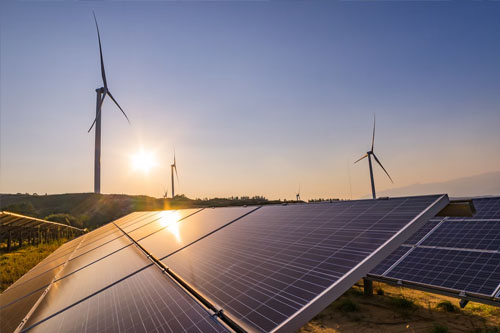
Clean and Green energy is one of the need of hour. Despite having abundance of sunlight the dependency of conventional energy is very high. In villages still light is one of the requirement and it creates lot of changes in family related to women and child. Often there is no light at the time of study resulting into poor performance. And the light from kerosene or other things is very harmful.
But the problem in villages is affordability. Despite the fact the women are ready to use clean energy sources but their capability to buy the product is very difficult. So we started the solar loan and we got support from some financial institutions as well for the promotion of solar light in villages.
It is very popular also as technology matured and different type of products came to market suited the need of villagers.
Since the year 2012 covering 800 families with solar lamp loan facilities, with DIYA VIKASH as technical partner and MILAP as funder with a company named D-LITE since 2013 with TERI, O’NERGY and SUN KING till today.
We have launched Hyper local marketing tools to reach the last mile people. With access of technology and demand in the filed it becomes very important to include the last mile people. We have entered into agreement with Amazon to provide all the goods and products to the last mile through our BC network. It is called Amazon stores where villagers order the product through Business Correspondence centers. BCAs help the customer to select the right kind of product and also order through their mobiles.